How to Stop Stalling a Manual Car When Starting From a Stop

How to Stop Stalling a Manual Car When Starting From a Stop
By Giuseppe Frustaci | Founder & Director, Stick Shift Driving Academy
TL;DR: A manual car stalls when the clutch is released before the engine has enough power. How to stop stalling a manual car comes down to three things: apply throttle first, release the clutch slowly through the biting point, and hold it there briefly before fully releasing. This guide covers every situation: first pull-aways, how to stop stalling at traffic lights, hill starts, reverse, and how to recover from stalling a car
Want hands-on help? Find a Stick Shift Driving Academy instructor near you and learn with a car provided.
Introduction: How to Stop Stalling a Manual Car

Learning how to stop stalling a manual car when starting from a stop is the first real challenge every driver faces behind the wheel of a stick shift. Whether you are just getting started or have been driving a manual car for a while and still cut out at intersections, the frustration is the same. Stalling is not a talent problem. It is a technique problem, and technique can be fixed.
With manual transmissions now accounting for less than 2% of new car sales in the United States, most drivers never receive formal clutch control instruction, which is why stalling remains one of the most common struggles for anyone learning to drive stick. According to the U.S. Department of Energy, more than 99% of light-duty vehicles produced in 2022 had automatic transmissions, confirming how valuable manual driving knowledge has become.
How to drive a manual car smoothly from a complete stop comes down to one skill: clutch control. This guide gives you the complete information on why the engine stalls, the exact coordination you need, and how to build that coordination into habit through structured practice. By the end, how to never stall a manual car will feel less like a mystery and more like a repeatable process.
At Stick Shift Driving Academy, we help drivers master clutch control every single day. How to drive a manual transmission correctly always starts here.
In over seven years of teaching clutch control at Stick Shift Driving Academy, the most common mistake I see is drivers rushing through the engagement zone before the engine is ready to take the load. That single adjustment, slowing down through the biting point, is what eliminates stalling for nearly every student.
1. Why a Manual Car Stalls When Starting From a Stop
In more than seven years of teaching stick-shift driving, the same cause accounts for nearly every stall: the clutch crosses the biting point before the engine has enough power to take the load. Correct the timing, and the stalling stops.
Understanding what causes a manual car to stall is the starting point. The reason a manual car stalls from a stop comes down to one thing: the clutch engages before the engine has enough power to carry the car forward. There is no other cause. Every stall, in every manual car, comes down to this single mechanical event: the clutch engaging before the engine was ready.
Two triggers cause stalling most often. The first is premature clutch release, releasing the clutch too quickly through the engagement zone without enough throttle behind it. The second is not knowing where your vehicle's biting point, the precise position in the clutch pedal's travel where the clutch plates first make contact and the engine begins transferring power to the wheels. Every manual transmission car has its clutch engagement at a different position on the pedal travel. Release through that zone too fast without knowing where it sits, and the engine stalls before it can carry the load.
The engine does not stall because you are a bad driver. If you keep asking why do I keep stalling my manual car, the answer is always the same: clutch and throttle, two inputs, out of sync. That is fixable.
2. Engine Power, RPM, and Gear Ratios
Not all vehicles behave the same from a complete stop. The RPM you need, the clutch feel, and the power available at low speed all depend on the engine and the specific vehicle.
In most gasoline engine vehicles, which is what most drivers learning to drive stick are working with, you need between 1,000 and 1,500 RPM before releasing the clutch from a full stop. That is the baseline. A diesel engine is different: it produces more torque at lower speeds, which is why some diesel manual transmission cars can actually pull away from a stop in second gear rather than first gear. This is not something to do as a general approach, but it illustrates how differently engines can behave. An automatic car manages all of this on its own. In a manual car, knowing your engine's capacity and limits is your responsibility as the driver.
Gear ratios also vary between models. A Toyota Corolla manual has different gear ratios than a Toyota Tacoma, meaning the power delivery and the clutch feel are different in each vehicle. The minute you switch to a different manual transmission car you have not driven before, spend time in a quiet area re-learning how to find the biting point before taking it into traffic. The U.S. Department of Energy fuel economy guide allows direct side-by-side comparison of transmission specifications for any vehicle.
3. Clutch Control: The Foundation of Everything
Clutch control is the most important skill in driving a manual car. The clutch pedal, the leftmost pedal in a manual transmission car, disconnects the engine from the drivetrain when fully pressed and re-engages it gradually as you release. Smooth gear shifts, stopping cleanly, performing hill starts, reversing safely, everything depends on how well you coordinate the clutch with the accelerator and the brake.
The technique is this: before releasing the clutch from a stop, the accelerator must already be applied. You are not holding the gas pedal at a fixed position, the pressure from the right foot changes as you move through the engagement zone. As the left foot slowly lifts the clutch, the right foot is simultaneously pressing the throttle. These two inputs move together.
Here is what to feel for: as you slowly lift the clutch from fully pressed, the RPM will drop slightly and the car will begin to pull forward. That is the biting point. Hold at that position briefly and let the engine stabilize and pick up before continuing to release fully.
Riding the clutch, keeping your foot resting lightly on the pedal while the car is moving, causes premature wear on the clutch disc. When the car is in motion and no gear change is needed, the left foot belongs on the footrest.
Master clutch control first. Steering and everything else come naturally once the coordination of clutch and accelerator is automatic. That same calm approach applies when you need to know how to recover from stalling a car — press the clutch, restart the engine, and use the same technique again.
A driver who has located the biting point on their car has removed the primary cause of stalling. From that point on, every successful pull-away comes down to keeping two inputs in step: the clutch releasing gradually, the throttle building in tandem.
4. Step-by-Step: Starting a Manual Car From a Complete Stop Without Stalling
These are the manual driving tips for beginners that make starting from a stop repeatable and consistent.
This is the full sequence:
Confirm the stick shift is in the neutral position.
Press the clutch fully down with your left foot.
Move the stick shift to 1st gear.
Keep your right foot on the brake pedal.
Gradually press the accelerator pedal until the engine reaches 1,000 to 1,500 RPM.
Slowly release the clutch pedal toward the biting point, do not rush through this zone.
Feel the RPM drop slightly and the car begin to pull. Hold here.
Release the brake and allow the car to begin moving.
Continue releasing the clutch smoothly while maintaining steady throttle.
Once fully released, rest the left foot on the footrest.
Step 6 is where stalling happens. Moving through the engagement zone too quickly, before the engine has time to respond, stalls the car every time. Slow down through that zone on every pull-away until it becomes automatic.
The critical moment in every pull-away is step 6. Slowing deliberately through the engagement zone, not rushing it, is the single correction that eliminates stalling. Every successful start comes down to how steadily the clutch crosses the biting point.
5. How to Move Off Quickly Without Stalling in a Manual Car
Knowing how to move off quickly without stalling in a manual car matters in real traffic. When the vehicle ahead moves and traffic expects you to go, a slow cautious start is not always an option.
The technique does not change, what changes is the throttle. Build more RPM before releasing the clutch than you would for a slow pull-away. Speed comes from the right foot, not from rushing the left foot. An abrupt clutch release at any engine speed will cause stalling, more power before the clutch begins to lift is always the answer.
Practice this in a quiet area first: pull away at pace, stop, repeat. Increase the speed of your pull-aways only as the coordination becomes consistent. Also be sure the car is in first gear before starting — selecting neutral by mistake can lead to a delayed start, and manual car stalling in neutral is also possible in some vehicles if the engine idle drops too low while waiting.
6. Clutch Control in Traffic
Clutch control in traffic is where most learner drivers find the challenge most intense, because traffic does not wait. The key is to prepare before you need to move.
When stopped at traffic lights, shift to first gear and hold the clutch fully pressed, right foot on the brake, your foot ready on the left pedal. Do not hold the car near the engagement zone while waiting for the traffic lights to change. This wears the clutch disc unnecessarily.
At a long stop, the cleanest approach is to move the stick shift back to the neutral position and rest both feet. Only prepare to move when the situation calls for it.
When traffic lights turn green, apply throttle to the right RPM for your vehicle before releasing the clutch. If the traffic lights have no countdown, watch the pedestrian signal, it typically changes a few seconds before the road light, giving you time to prepare without rushing. Many drivers wonder: is it bad to stall a manual car? No — a stall does not damage the engine, and recovery takes only a few seconds.
7. Smooth Gear Shifts While Driving
Smooth gear shifts use the same coordination as starting from a stop: clutch and throttle timed together through the transition.
When shifting up, from first gear to the next gear, for example, release the accelerator, press the clutch fully, move the stick shift to the next gear, then release the clutch while simultaneously pressing the throttle. Keep transitions quick and controlled. Jerky changes come from rushing the clutch release or not re-applying the accelerator smoothly on the way back in.
Know when to shift. If the engine is running around 2,000 to 2,500 RPM, that is the signal to move to the next higher gear. If the RPM is too low for the gear you are in, downshift. You cannot jump from fifth gear to first gear, that can damage the transmission. Move through each gear in sequence. Knowing the right gear for your speed and engine load comes with time, pay attention to how the engine feels and sounds, and it will tell you. Knowing what causes a manual car to stall during a gear change — clutch lifted too quickly without enough throttle — also applies here: the same coordination that prevents stalling from a stop prevents stalling mid-gear.
8. Stopping a Manual Car Smoothly
Stopping a manual car smoothly, which is also how to stop a manual car without stalling, means working down through each gear in sequence as speed decreases, not riding the brake in a high gear until the car stops.
As speed drops, downshift in order: from fifth gear to fourth gear, fourth to third, third to second gear, then first gear as you approach a complete stop. Moving through each gear keeps the drivetrain controlled and the stop smooth.
Rev match on downshifts where you can, briefly pressing the throttle as you press the clutch and move to the lower gear helps match engine speed to the gear you are entering. It produces cleaner transitions and reduces wear over time.
If you are on an incline and trying to stop, the same sequence applies. The engine needs more power on a gradient, downshift earlier than you would on flat road.
At the final moment of the stop: as the car slows to below 10 km/h, press the clutch fully and apply the brake. Failing to press the clutch in that last moment is how the engine stalls when coming to a stop, and it is entirely preventable.
9. Hill Starts in a Manual Car: Starting on an Incline
Hill starts in a manual car are the scenario where rollback is the real risk. Without the handbrake, the car will roll backward the moment the brake is released. The handbrake removes that risk.
The handbrake method:
Stop on the slope. Press the clutch fully. Right foot on the brake.
Apply the handbrake fully.
Select first gear.
Gradually press the accelerator, more throttle than on flat ground. The engine needs extra power to carry the car's weight against the incline.
Slowly release the clutch toward the engagement zone. When you feel the car strain against the handbrake, the engine is ready to carry the load.
Release the handbrake smoothly and continue releasing the clutch.
Maintain steady throttle. Do not shift to second gear until the RPM is clearly high enough and the vehicle can carry its weight uphill without struggling. On a steep incline, stay in first gear until you feel confident the engine has the load.
For older manual transmission cars without hill start assist, this handbrake method is non-negotiable. Most modern manual transmission cars have hill start assist built in, but mastering the handbrake technique gives you full control regardless of the vehicle you are driving.
The handbrake is there to hold the car while you prepare, use it. Only release it when the clutch and throttle are ready to take over. Mastering this process is how to stop a manual car without stalling on any hill start.
10. Reverse Gear
The reverse gear uses the exact same clutch and throttle coordination as pulling away in first gear, the car simply moves backward.
Mastering reverse is the most difficult skill for any new driver starting out with a stick shift vehicle, because it adds mirrors, spatial awareness, and steering into the coordination at the same time.
Before selecting reverse:
Come to a complete stop.
Press the clutch fully. Right foot on the brake pedal.
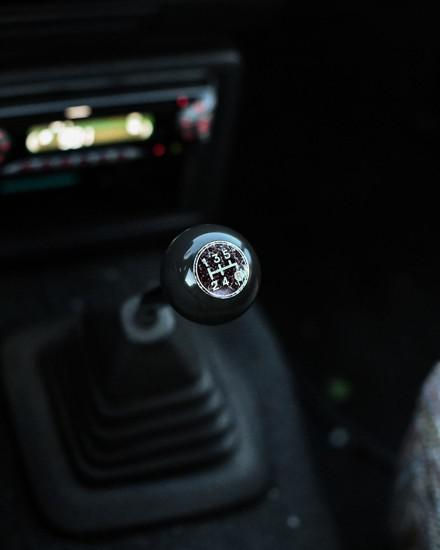
Move the stick shift to reverse. Position varies by model, always refer to the manual gearbox gear diagram for your vehicle. Some models place reverse beside first gear; others position it in the lower right corner.
Check your mirrors, left side mirror, right side mirror, center mirror, and the reverse camera if your vehicle has one.
Moving in reverse: 5. Gradually transition your right foot from the brake pedal to the accelerator. 6. Slowly release the clutch until you reach the engagement zone and feel the car begin to move. 7. Continue releasing while gently pressing the accelerator. Keep speed slow.
Steering while reversing requires attention, this is the coordination of clutch, accelerator, and steering wheel together. Steering is easier when the car is already moving than when it is stationary. Get the car moving with the clutch and throttle first, then steer.
To slow down while reversing, release the accelerator and press the clutch. For a full stop, press the clutch fully and apply the brake.
The most common mistake here is focusing on the pedals instead of the mirrors. Once the coordination is automatic, your attention moves where it needs to be, on the mirrors and where the car is going, not on your feet. This is how to avoid stalling a manual car in reverse: treat it as a slow-speed pull-away using the same clutch and throttle coordination.
11. How to Restart the Engine After a Stall
The steps for how to recover from stalling a car are the same every time. When the engine stalls at a stop, restart the engine and begin again. There is no shortcut.
Recovery sequence:
Press the clutch fully and immediately.
Apply the brake.
Move the stick shift to the neutral position.
Restart the engine.
Return to the step-by-step sequence in Section 4.
Stalling from a stop becomes less frequent as clutch control becomes automatic. Early on, a stall simply tells you what to adjust, slower release, more throttle, more RPM before the clutch begins to lift. Reset calmly and try again.
12. Practice: Building Clutch Control and Stopping Stalling for Good
The fastest way to stop stalling in a manual car is not more time behind the wheel. It is fifteen minutes of deliberate clutch practice in a quiet car park, done before any attempt at traffic.
The clearest manual driving tips for beginners focus on progressive practice, not early traffic exposure. Knowing how to avoid stalling a manual car permanently requires building clutch control in stages. The fastest path to stopping stalling in a manual transmission car is structured practice, not more time repeating the same mistake. Here is the information on how to do it right:
Step one: learn the clutch alone. In a quiet, open area, practice only finding the engagement zone, slowly lift the clutch until you feel the RPM drop and the car begin to pull, then press it back down. No forward movement yet. Repeat for a few minutes until the position is completely familiar. A new driver who spends this time first will progress significantly faster than one who goes straight to traffic.
Step two: add the accelerator. Once the engagement zone is reliable, add the throttle coordination. Practice full pull-aways from a complete stop and clean stops in the same quiet location. Do this until both actions are consistent and natural.
Step three: build to real conditions gradually. Quiet roads first, then busier roads, then traffic lights and slopes. Clutch control in traffic is a later step, attempting difficult conditions before the basics are automatic is the fastest way to stay stuck and keep stalling.
Stop looking at your feet. The natural instinct when starting out is to look down at the clutch and accelerator. Stop doing this as early as you can. Keep your attention on the road and the mirrors. The technique becomes automatic before it feels automatic, trust the repetition and it will come.
13. Key Takeaways: How to Never Stall a Manual Car
Every technique in this list can be practised in under an hour by any driver who has never sat in a manual car before. The most important step is always the first: locate the biting point before attempting a single pull-away.
Everything about how to stop stalling when starting from a stop comes down to these:
The stalling happens for one reason: the clutch connected before the engine had enough power. Fix the RPM and the release speed, and the stalling goes away.
Knowing how to find the biting point in every new manual transmission car before driving in traffic. This is non-negotiable.
Throttle and clutch move together from a stop, not one after the other.
More load means more RPM needed before releasing. Hill starts, a heavy manual transmission car, extra passengers, all require more engine speed.
At long stops, use neutral. Never hold near the engagement zone while waiting. Rest both feet.
Shift down through every gear when stopping, from fifth, to fourth, to third, to second gear, to first. Never skip gears.
How to never stall a manual car is not something you apply once. It is the same deliberate technique through the engagement zone, consistently, every single time you pull away from a complete stop.
Frequently Asked Questions About Stalling a Manual Car
How do I stop stalling a manual car at traffic lights?
Knowing how to stop stalling at traffic lights is about preparation and timing. At traffic lights, shift to first gear and hold the clutch fully pressed with your right foot on the brake. When the light changes, build 1,000 to 1,500 RPM and release the clutch slowly through the engagement zone. The most common mistake at lights is releasing the clutch too quickly because traffic pressure makes drivers rush.
Does stalling a manual car damage it?
Is it bad to stall a manual car? Many learners ask this before they have learned clutch control. An occasional stall does not damage the engine or transmission. The car is designed to handle stalls. Repeated abrupt stalls caused by dropping the clutch quickly add minor wear to the clutch disc over time, but controlled stalls during the learning process cause no lasting harm.
How do I find the biting point on a new manual car?
Practising how to find the biting point in a new car should always be done in a quiet, open space first. In a quiet area, press the clutch fully, select first gear, and keep the brake on. Slowly lift the clutch pedal while listening and feeling for the moment the RPM drops slightly and the car strains against the brake. Hold at that position briefly. That is the biting point for that vehicle. Every manual car places it at a different point on the pedal travel.
What should I do after stalling at a red light?
Press the clutch fully and apply the brake immediately. Move the stick shift to neutral. Restart the engine. Return to the pull-away sequence: first gear, build RPM, release the clutch slowly through the engagement zone. Stay calm. Calmly resetting the engine after a stall and trying again is the correct response every time. Understanding what causes a manual car to stall, and how to recover from stalling a car quickly, makes this scenario easy to manage.
Can a manual car stall in neutral?
Manual car stalling in neutral is not possible during normal driving. A manual car in neutral cannot stall from clutch misuse since neutral disconnects the gearbox from the drivetrain. An engine in neutral can stall if the idle speed drops too low, for example in very cold conditions or if there is an engine fault, but this is unrelated to clutch technique.
Why do I keep stalling my manual car?
If you keep stalling your manual car, the cause is almost always the same: the clutch is being released too quickly through the engagement zone before the engine has enough power to take the load. Slow down your clutch release in that zone and build more RPM before lifting.
How to stop a manual car without stalling?
To stop a manual car without stalling, press the clutch fully before the car reaches low speeds. As you slow, downshift through the gears in sequence, then press the clutch completely just before coming to a full stop. Apply the brake smoothly. The key is pressing the clutch before the engine speed drops below idle.
How to avoid stalling a manual car: the key habits
To avoid stalling a manual car, always find the biting point before releasing the clutch, build 1,000 to 1,500 RPM before lifting, and slow your release through the engagement zone. These three habits eliminate most stalls. The more you practise them in quiet areas before tackling traffic, the more automatic they become.s
Key Manual Driving Terms Defined
Biting point: The precise position on the clutch pedal where the clutch plates make contact and the engine begins transferring power to the wheels. Also called the engagement zone. Finding the biting point is the single most important skill for learning how to stop stalling a manual car.
Engagement zone: The range of clutch pedal travel where the clutch plates are partially engaged. Moving through the engagement zone too quickly is the primary cause of stalling from a stop. Slow, deliberate movement through this zone prevents the engine from being overwhelmed before it can take the load.
Rev matching: The technique of briefly pressing the throttle while the clutch is depressed during a downshift, raising engine speed to match the speed of the lower gear before engaging. Rev matching on downshifts reduces drivetrain shock, produces smoother gear changes, and extends clutch life.
Gear ratios: The numerical relationship between engine speed and wheel speed in each gear. First gear has the highest gear ratio, delivering maximum torque at low speed; this is why it is used for pulling away from a stop. Each higher gear reduces the ratio, trading torque for speed. Gear ratios vary significantly between vehicles: the U.S. Department of Energy fuel economy guide allows direct comparison of transmission specifications across different models.
Clutch disc: The friction component inside the clutch assembly that transfers drive between the engine and the gearbox. Riding the clutch (resting your foot on the pedal while the car is moving) keeps the clutch disc partially engaged and causes premature wear.
Drivetrain: The system of components transmitting power from the engine to the driven wheels, including the clutch, gearbox, driveshaft, and differential. The clutch is the manual control point that connects and disconnects the engine from the rest of the drivetrain.
Hill start assist: An electronic safety feature on most modern manual transmission cars that holds brake pressure briefly when the driver moves their foot from the brake to the accelerator on an incline. According to the National Safety Council, this system maintains brake pressure for a set period as you switch from the brakes to the gas pedal, eliminating rollback risk.
Torque: The rotational force an engine produces, measured in Newton-metres (Nm) or pound-feet (lb-ft). Diesel engines generate high torque at low RPM, which is why some can pull away in second gear; petrol engines need more revs to develop sufficient torque to move from a standstill. At idle, available torque is limited: releasing the clutch before reaching the correct RPM causes stalling because the drivetrain load exceeds what the engine can handle.
Conclusion
Driving a manual car confidently from a stop, in traffic, on hills, in reverse, is entirely learnable. Every learner driver who has stalled repeatedly at intersections has gone through the same process: locating the engagement zone, coordinating clutch and throttle, and building the habit through structured practice.
How to stop stalling a manual car, how to move off quickly in traffic without stalling, how to drive a manual transmission smoothly, all of it traces back to clutch control. Get that right, and driving a stick shift vehicle becomes something you do naturally, without thinking.
At Stick Shift Driving Academy, we have helped nearly 15,000 people since 2017 go from stalling constantly to driving a manual transmission car with full confidence. The technique is the same every time. It works.
Ready to practice with a patient instructor and a car provided? Book a stick shift driving lesson at a location near you, or read our guide on 9 unusual recommendations for learning to drive a manual.
Giuseppe Frustaci is the Founder and Director of Stick Shift Driving Academy (SSDA), a nationwide manual transmission driving school in the United States. He has spent more than seven years teaching clutch control and manual driving hands-on, building SSDA from a single location into a nationwide network of instructors. As the academy puts it: “Since 2017, we’ve helped nearly 15,000 people to discover the joy of the open road.” Stick Shift Driving Academy has been featured in Autoweek, Jalopnik, Hagerty, and the Detroit Free Press, with Frustaci interviewed for the Autoweek and Detroit Free Press pieces. Connect on LinkedIn at linkedin.com/in/giuseppefrustaci or follow @Fritalci on Instagram.

Comments